Guides
What a Mattress Topper Can and Cannot Fix
Quick answer
A mattress topper changes surface feel only. It cannot fix a sagging or worn out mattress, because it follows the dip down with you. If there is a visible body impression in the mattress itself, that mattress is the problem, not something a layer on top of it can correct.
Toppers get sold as a fix for almost anything, too firm, too soft, too old, too hot. Some of that is fair, a topper is a genuinely good tool for changing surface feel cheaply. The part that is not fair is letting anyone believe it will restore support that the mattress underneath has already lost, because physically it cannot: the topper is a thin layer riding on top of whatever shape is already there. Knowing which category a problem falls into, surface feel or lost support, is the difference between a topper that solves it in a weekend and one that gets returned a month later having changed nothing.
On this page
What can a topper actually fix?
Surface feel, directly and reliably. A mattress that feels too firm gets a softer top layer without buying a whole new mattress. A mattress that runs hot can get a gel-infused or open-cell layer that changes how heat moves at the surface. Two people sharing a bed with different preferences can each get their own topper on their own half. And a mattress that is structurally fine but simply feels tired after years of use can get a genuine refresh in feel from a topper, cheaply, because the underlying support was never the issue in that case.
A topper is also a reasonable way to buy time on a mattress that is still within its expected service life but has started to feel a little firmer or a little flatter than it did when new, since surface materials do change with wear before the deeper support layers actually fail. That is a different situation from a visible dip, and the next section is about telling the two apart.
What a topper cannot fix
How much does topper thickness actually change the feel?
| Thickness | Label | What to expect |
|---|---|---|
| 2 in | Mild | Takes a light edge off a firm surface. Barely changes sheet fit. |
| 3 in | Noticeable | The most common choice. A clear softening, and the point where sheet pocket depth starts to matter. |
| 4 in | Large | A big change in feel. Check pocket depth, and expect more heat retention in foam. |
Convention, not a standard
This is widely repeated guidance rather than a measured standard. Treat it as a starting point.
Thicker is not automatically better, it is simply more change, and more for you to sink into. Match thickness to how much difference you actually want, not to a belief that more foam fixes more problems.
What does a topper do to your sheets?
| Added on top | Total stack depth | Pocket class needed |
|---|---|---|
| Nothing | 12 in | Standard pocket |
| 2 in topper | 14 in | Deep pocket |
| 3 in topper | 15 in | Deep pocket |
| 4 in topper | 16 in | Deep pocket |
Industry standard
These are standard published dimensions, the same across manufacturers.
A topper adds its full thickness to what the fitted sheet has to clear, which is the most common unpleasant surprise after buying one. Check your own stack with Sheet Pocket Depth Calculator.
Break-in time for a new topper
A foam topper is compressed for shipping and needs time to reach its intended feel, commonly 24 to 72 hours to fully expand and up to 14 to 30 nights before your body adjusts to how it feels underneath you. Judging a topper in the first night or two is judging it before it has finished expanding, which is worth knowing before deciding it was the wrong choice.
Toppers worth a look
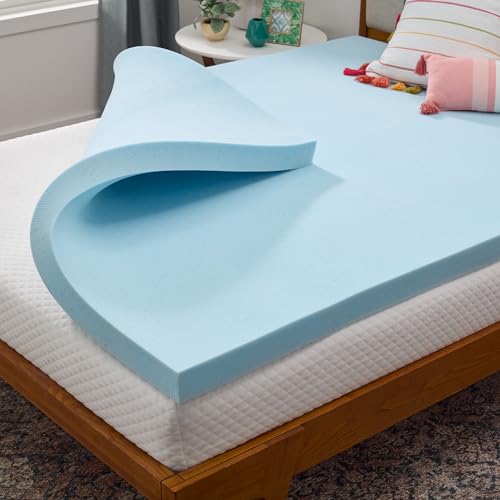
Linenspa Memory Foam Mattress Topper
$89.99Queen memory foam topper at the most common 3 inch thickness.
Check price on Amazon
EGOHOME 3 Inch Queen Memory Foam Mattress Topper- Cooling Gel Infused
$59.99Queen memory foam topper, 3 inches, with a manufacturer-described cooling feature.
Check price on Amazon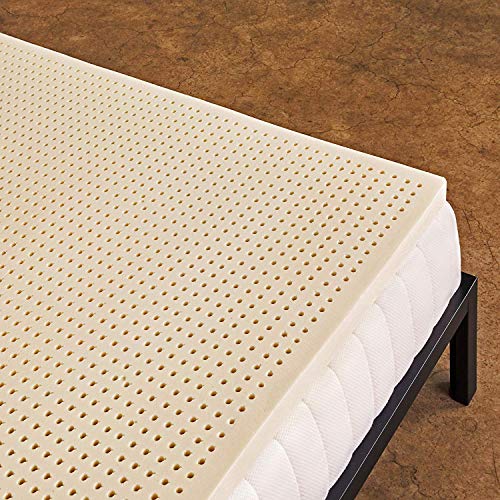
Pure Green Natural Latex Mattress Topper - Medium Firmness - 2 Inch - Queen Si
$219.00Queen natural latex topper at 2 inches, rated medium firmness by the maker.
Check price on Amazon
DOWNCOOL 5 Inch Cooling Queen Mattress Topper
$64.99Queen topper at 5 inches, a large change in feel, rated soft by the maker.
Check price on AmazonFrequently asked questions
Can a mattress topper fix a sagging mattress?
No. A topper is a thin layer that sits on top of whatever shape the mattress already has, so it sinks into an existing dip rather than lifting it back up. A visible body impression that stays after you get up means the mattress itself has lost support. The only real fix for a sagging mattress is replacing the mattress, not adding a layer on top of it.
What does a mattress topper actually do?
It changes surface feel: softening a mattress that runs too firm, adjusting temperature at the surface with a cooling material, or refreshing the feel of a mattress that is structurally fine but has started to feel tired. It is a genuinely effective, low-cost tool for those specific problems, but it works on feel alone and has no effect on the mattress's underlying support structure.
How thick should a mattress topper be?
Match thickness to how much change you want. Two inches takes a light edge off a firm mattress with minimal effect on sheet fit, three inches is the most common choice and makes a clear difference, and four inches is a large change that also affects sheet pocket depth and tends to retain more heat in foam. Thicker is more change, not automatically better.
Does a topper mean I need new sheets?
Often, yes. A fitted sheet has to clear the mattress plus the topper's full thickness. A 3 inch topper on a 12 inch mattress creates a 15 inch stack, which needs a deep pocket sheet rather than a standard one. Check your total stack depth against the standard sheet pocket classes before assuming your current sheets will still fit.
How long before a new topper feels normal?
Give it 24 to 72 hours to fully expand after unpackaging, and up to 14 to 30 nights before judging the actual feel, since your body needs time to adjust to a new surface as much as the foam needs time to expand. Judging a topper on the first night or two means judging it before it has finished settling into its intended shape.
Does a topper help a mattress that is too firm or too soft?
It reliably helps a mattress that feels too firm, since adding a softer layer on top directly changes that surface feel. It does very little for a mattress that feels too soft, since a topper adds more surface give rather than more underlying support. A too-soft mattress usually points to a support problem that a topper cannot supply.
How to read the numbers on this page. Standard mattress and bedding dimensions are industry-wide and the same across manufacturers. Guidance like replacement intervals, firmness by body weight and walking clearance is convention rather than a measured standard, and every table here says which it is. Where a manufacturer does not publish a figure we leave it out instead of estimating. This is not medical advice: a mattress is not a treatment for a medical condition, and persistent pain is a reason to see a clinician.