Guides
The Mattress Firmness Scale Explained
Quick answer
Mattress firmness is not a standardized measurement. Each manufacturer assigns its own 1 to 10 number relative to its own lineup, so a 6 from one brand can feel like a 7 from another. On the scale most brands describe, 3 is soft, 4 is medium soft, 5 is medium, 6 is medium firm (the most widely sold feel), 7 is firm and 8 is very firm. ILD is a real foam measurement, but it describes one foam layer, not a finished mattress, and most brands never publish it.
"How is mattress firmness measured" is one of the most searched questions in this category, and the honest answer disappoints most shoppers looking for a hard number: there is no meter, no lab test and no third-party certification behind the firmness rating on a mattress listing. It is a number the manufacturer chooses. That does not make it useless, it just means it only means something within one brand's own lineup.
On this page
How is mattress firmness actually measured?
It generally is not measured by any standardized test. Each manufacturer sets its own 1 to 10 firmness scale relative to the softest and firmest mattresses in its own lineup, so a mattress a brand calls a 6 sits in the middle of that brand's own range, not on any scale shared across the industry. A 6 from one company can feel closer to a 7 or a 5 from another. There is one real physical measurement in this space: ILD, indentation load deflection, which measures how much a specific foam sample compresses under a set load in a lab test. It is a genuine number, but it describes a single foam layer tested in isolation, not a finished mattress built from multiple layers, a quilted cover and a support core. Most mattress brands do not publish ILD at all, and even when one does, it cannot be compared directly to another brand's stated firmness number.
The 1 to 10 firmness scale
| Number | Feel | Who it tends to suit |
|---|---|---|
| 2 | Very soft | Rarely sold. Sinks deeply. |
| 3 | Soft | Lighter side sleepers. |
| 4 | Medium soft | Side sleepers who want pressure relief. |
| 5 | Medium | Combination sleepers. |
| 6 | Medium firm | The most widely sold feel. Back and combination sleepers. |
| 7 | Firm | Back and stomach sleepers, heavier sleepers. |
| 8 | Very firm | Stomach sleepers and those who want minimal sink. |
Convention, not a standard
This is widely repeated guidance rather than a measured standard. Treat it as a starting point.
These descriptions are set by each manufacturer for its own lineup and are not standardized or directly comparable between brands. Treat the number as a starting point, not a guarantee of feel.
Recommended firmness by sleep position and body weight
| Position | Under 130 lb | 130 to 230 lb | Over 230 lb |
|---|---|---|---|
| Side | 3 to 5 | 4 to 6 | 5 to 7 |
| Back | 5 to 6 | 6 to 7 | 6 to 8 |
| Stomach | 6 to 7 | 6 to 8 | 7 to 8 |
| Combination | 4 to 6 | 5 to 7 | 6 to 8 |
Convention, not a standard
This is widely repeated guidance rather than a measured standard. Treat it as a starting point.
This is widely repeated guidance, not a measurement, and firmness numbers are still set by each brand for its own range. Use it as a starting range with Mattress Firmness Calculator, and confirm the feel during the mattress's own trial period.
Why ILD does not help you compare mattresses
Even when a brand does publish an ILD number for the foam inside a mattress, it describes that one layer tested alone under a specific load, not how the finished product feels once it is wrapped in a quilted cover, layered over a support core and lying under your actual body weight. Two mattresses with the same ILD foam layer can feel completely different once the rest of the construction is added. Because most brands do not publish ILD at all, and the ones that do cannot be lined up against each other, the practical comparison tool is still each brand's own trial period, not a spec sheet.
Shop mattresses by declared firmness

GAESTE Queen 10 Inch Cooling Gel Memory Foam Mattress
$188.9710 inch queen memory foam, medium feel as the maker describes it.
Check price on Amazon
12 Inch California King Size Hybrid Mattress in a Box Medium
$329.9912 inch california king hybrid, medium feel as the maker describes it.
Check price on Amazon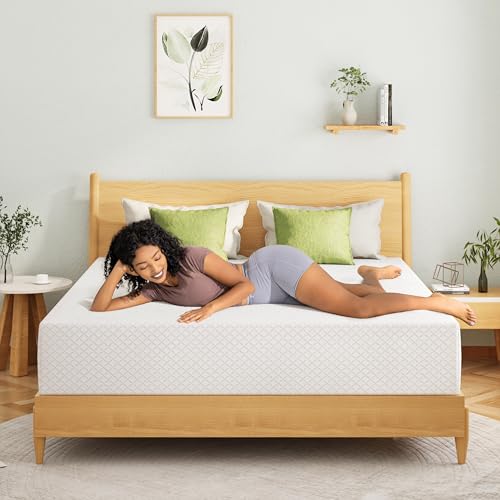
EGOHOME Queen Mattress 12 Inch
$249.9912 inch queen memory foam, medium firm feel as the maker describes it.
Check price on Amazon
SayTale Queen Mattress 12 Inch Hybrid Queen Size Mattress in a Box Medium Firm
$161.7712 inch queen hybrid, medium firm feel as the maker describes it.
Check price on Amazon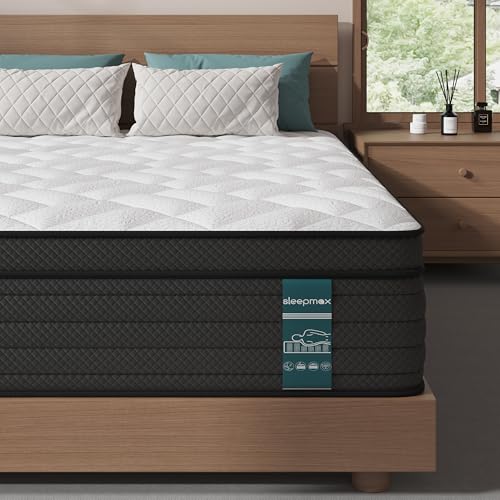
Sleepmax Extra Firm Queen Mattress 12 Inch
$299.9912 inch queen hybrid, extra firm feel as the maker describes it.
Check price on Amazon
Extra Firm Queen Mattress - 14" Memory Foam Mattress for Spinal Alignment
$399.9914 inch queen memory foam, extra firm feel as the maker describes it.
Check price on AmazonFrequently asked questions
Is mattress firmness the same across all brands?
No. There is no industry-wide test or certification behind the 1 to 10 firmness number on a mattress listing. Each manufacturer sets its own scale relative to the softest and firmest mattresses it sells, so a 6 from one brand is not guaranteed to feel the same as a 6 from another. Treat the number as useful only for comparing mattresses within the same brand's own lineup.
What does ILD mean on a mattress or foam listing?
ILD stands for indentation load deflection, a lab measurement of how much a specific piece of foam compresses under a set load. It is a real, physical number, but it describes one foam layer tested by itself, not a finished mattress built from multiple layers and a cover. Most mattress brands do not publish an ILD figure at all, and it cannot be compared directly across brands even when they do.
What firmness is best for side sleepers?
Widely repeated guidance puts side sleepers in the 3 to 7 range depending on body weight: lighter side sleepers, under about 130 lb, often prefer 3 to 5, while heavier side sleepers, over about 230 lb, often need 5 to 7 for enough support. This is convention rather than a measurement, and since firmness numbers vary by brand, the actual feel should still be confirmed during a mattress's trial period.
What is the most popular mattress firmness?
Medium firm, generally described as a 6 on the 1 to 10 scale, is the most widely sold feel across the mattress industry. It tends to suit back and combination sleepers and is the default many brands build their flagship model around. That said, the number is set independently by each brand, so a "6" is a starting point for what to try, not a guarantee of exactly how a specific mattress will feel.
Can I trust a manufacturer's firmness number?
You can trust it as accurate within that brand's own lineup, since a company's 8 will reliably feel firmer than its own 4. What you cannot do is compare that number directly to a different brand's scale, because there is no standardized test setting either one. Use the number as a rough starting point, then rely on the mattress's trial period to confirm the actual feel matches what you expected.
Does firmness change as a mattress breaks in?
Yes, somewhat. New foam mattresses commonly need roughly 24 to 72 hours just to fully expand after being compressed for shipping, and manufacturers often describe an additional adjustment period, commonly up to about 30 nights, before the foam softens slightly and settles into its intended feel. A mattress that feels firmer than expected on the first night is not necessarily the wrong firmness; give it the full break-in window before judging.
How to read the numbers on this page. Standard mattress and bedding dimensions are industry-wide and the same across manufacturers. Guidance like replacement intervals, firmness by body weight and walking clearance is convention rather than a measured standard, and every table here says which it is. Where a manufacturer does not publish a figure we leave it out instead of estimating. This is not medical advice: a mattress is not a treatment for a medical condition, and persistent pain is a reason to see a clinician.