Guides
How to Move a Mattress
Quick answer
A mattress carried on its edge only needs to clear its own thickness through a doorway, not its full width. Foam bends around a tight corner briefly without damage; hybrid and innerspring mattresses built on coils do not flex the same way and should travel flat whenever the space allows it.
The part of moving a mattress that trips people up is assuming the whole width has to clear a doorway, when in practice a mattress is almost always carried standing on its edge, and on edge the number that matters is thickness, not width. Getting that straight before moving day changes how you plan the route and whether a tight stairwell corner is actually a problem.
On this page
What actually has to fit through the doorway?
Standing a mattress on its long edge turns the width dimension vertical and puts thickness sideways, which is the number that has to clear the doorway's width and any tight turn along the route. A queen mattress at 12 inches thick clears almost any interior doorway on edge, even though the mattress is 60 inches wide lying flat. Measure the doorway and stairwell turns against the mattress's thickness, not its full footprint, before assuming a move will not work.
Standard mattress sizes, for reference on the flat sections of the move
| Size | Width (in) | Length (in) |
|---|---|---|
| Twin | 38 | 75 |
| Twin XL | 38 | 80 |
| Full | 54 | 75 |
| Queen | 60 | 80 |
| King | 76 | 80 |
| California King | 72 | 84 |
Industry standard
These are standard published dimensions, the same across manufacturers.
These are the standard footprints you are working with once the mattress is flat, such as loading it into a moving truck or laying it in a room at the other end. On edge going through doorways, only the thickness dimension matters.
How to move a mattress, step by step
- Clear the route first. Walk the actual path from the bedroom to the truck or new room, noting every doorway, stairwell turn, and landing before carrying the mattress at all.
- Measure the tightest doorway and the mattress thickness. Compare the mattress's thickness, not its width, against the narrowest doorway or turn on the route, since it will travel on edge through those points.
- Bag or wrap the mattress. A mattress bag or plastic wrap keeps it clean and protected against door frames and stair rails during the carry.
- Carry it on its edge, foam side flexible. A foam mattress can bend slightly around a tight corner for a moment without damage. Handle it gently and let it straighten back out once past the tight point.
- Keep hybrid and innerspring mattresses flat where possible. These are built on an internal coil structure that does not flex the way foam does. Bending one sharply around a corner can permanently distort the coils, so route around tight turns rather than forcing it through.
- Let it rest flat before use. Once in place, give a foam mattress the standard 24 to 72 hours to fully re-expand after being compressed or bent during the move, and avoid judging the feel until it has settled.
A caution for coil mattresses on tight turns
Should I move a mattress by myself?
A twin or full mattress is manageable for one person over a short, flat distance, but a queen, king, or California king is long and awkward enough that two people make the corners and stairs meaningfully safer and reduce the chance of dropping it into a wall or door frame. This is a practical handling point rather than a weight specification, since exact mattress weight varies by model and is not something to guess at when planning a lift.
Products worth having on moving day
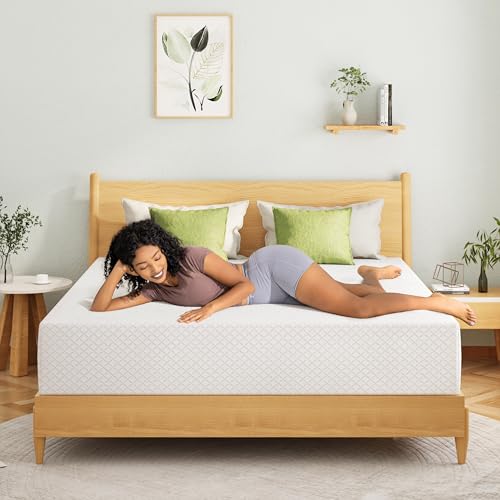
EGOHOME Queen Mattress 12 Inch
$249.9912 inch queen memory foam mattress, the construction that can flex briefly around a tight stairwell turn.
Check price on Amazon
Novilla Queen Mattress
$225.7912 inch queen hybrid built on coils, the construction that should travel flat rather than bent.
Check price on Amazon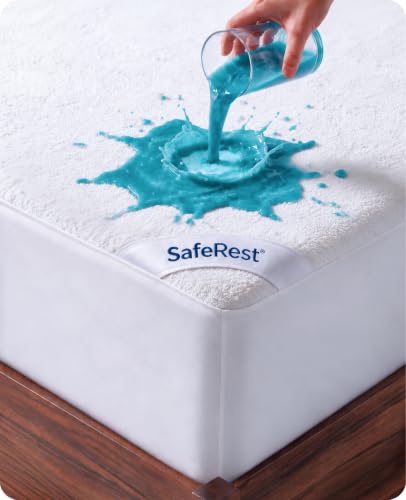
SafeRest Waterproof Queen Size Mattress Protector
$39.99Queen waterproof mattress protector, worth having on before the mattress goes into a moving truck or storage.
Check price on Amazon
GORILLA GRIP Non Slip Mattress Gripper
$27.99Queen mattress gripper, for resecuring the mattress to the frame once it is back in place.
Check price on AmazonFrequently asked questions
What size doorway do I need to move a mattress?
Carried on its edge, a mattress only needs to clear a doorway equal to its thickness, not its full width or length. A 12 inch thick queen mattress on edge clears almost any standard interior doorway even though the mattress itself is 60 inches wide flat. Measure the doorway against thickness, and check tight stairwell turns the same way.
Can a foam mattress bend around a corner when moving it?
Yes, briefly and without damage. Foam mattresses can flex slightly around a tight stairwell corner during a move and return to their original shape afterward. This is specific to foam construction, not a general rule for every mattress type, so it should not be assumed for a hybrid or innerspring mattress on the same route.
Can I bend a hybrid or innerspring mattress to move it?
Not sharply. Hybrid and innerspring mattresses are built on one interconnected coil structure that does not flex the way foam does, and forcing a sharp bend around a corner can permanently distort the coils. Route these mattresses through a path where they can travel flat or with only a slight bend, even if that means a longer path.
How long should a mattress rest after being moved?
A foam mattress that was compressed, bagged, or bent slightly during a move commonly needs 24 to 72 hours to fully re-expand back to its normal shape, and up to 14 to 30 nights before you can fairly judge how it feels. Judging comfort immediately after a move means judging it before it has finished settling.
Should I move a mattress standing up or flat?
Standing it on its long edge is the usual method through doorways and stairwells, since only the thickness has to clear tight points that way. Once loaded into a truck or laid down in the new room, laying it flat is fine and is how it should rest for actual use afterward.
Do I need a mattress bag to move it?
It is not required structurally, but a mattress bag or heavy plastic wrap protects the fabric cover from door frames, stair rails, and truck surfaces during the carry, and keeps it clean if it needs to sit in storage or a garage temporarily. It is a cheap step that prevents cosmetic damage on an otherwise careful move.
How to read the numbers on this page. Standard mattress and bedding dimensions are industry-wide and the same across manufacturers. Guidance like replacement intervals, firmness by body weight and walking clearance is convention rather than a measured standard, and every table here says which it is. Where a manufacturer does not publish a figure we leave it out instead of estimating. This is not medical advice: a mattress is not a treatment for a medical condition, and persistent pain is a reason to see a clinician.