Guides
Mattress Lifespan Chart by Type
Quick answer
Commonly cited mattress service life by construction: innerspring 5 to 7 years, memory foam 8 to 10 years, hybrid 7 to 10 years, latex 10 to 15 years, pillow top 5 to 7 years. These are averages, not warranties: a visible dip, a sagging edge or waking up stiff are the real signals that a mattress is due, regardless of its age.
"Replace your mattress every 7 to 10 years" is repeated so often it sounds like a rule, but it is an average across very different constructions, and the honest range runs from 5 years for a basic innerspring up to 15 for latex. Age is a prompt to check the mattress, not a verdict on its own.
On this page
Typical mattress lifespan by construction
| Construction | Typical lifespan (years) |
|---|---|
| Innerspring | 5 to 7 |
| Memory foam | 8 to 10 |
| Hybrid | 7 to 10 |
| Latex | 10 to 15 |
| Pillow top | 5 to 7 |
Convention, not a standard
This is widely repeated guidance rather than a measured standard. Treat it as a starting point.
This is widely repeated guidance, not a measured standard or a warranty term. Check your own mattress's age against this range at Mattress Replacement Timing Calculator.
When guidance shifts from fine to watch to due
| Construction | Generally fine (years) | Watch for wear (years) | Due for replacement (years) |
|---|---|---|---|
| Innerspring | Under 5 | 5 to 6 | 7 and older |
| Memory foam | Under 8 | 8 to 9 | 10 and older |
| Hybrid | Under 7 | 7 to 9 | 10 and older |
| Latex | Under 10 | 10 to 14 | 15 and older |
| Pillow top | Under 5 | 5 to 6 | 7 and older |
Convention, not a standard
This is widely repeated guidance rather than a measured standard. Treat it as a starting point.
Age is a prompt to look, not a verdict on its own. A visible dip, a sagging edge or waking up stiffer than when you fell asleep matter more than the calendar.
What a mattress costs per night across its lifespan
| Mattress (real listed price) | Construction | Typical lifespan (yr) | Cost per night, low end | Cost per night, high end |
|---|---|---|---|---|
| EGOHOME Queen 12 in memory foam, $249.99 | Memory foam | 8 to 10 | $0.09 | $0.07 |
| Zinus Queen 10 in memory foam, $229.99 | Memory foam | 8 to 10 | $0.08 | $0.06 |
| SayTale Queen 12 in hybrid, $161.77 | Hybrid | 7 to 10 | $0.06 | $0.04 |
| FLEXPEDIC Queen 14 in hybrid, $499.99 | Hybrid | 7 to 10 | $0.20 | $0.14 |
Calculated
These figures are calculated from the numbers shown, not quoted from a manufacturer.
Cost per night is price divided by years times 365 nights, computed at the low and high end of that construction's typical lifespan range. Prices are the catalog's own listed prices at the time this was written and will drift; run your own price at Cost Per Night Calculator.
Signs it is time to replace, regardless of age
A visible body impression or dip that does not spring back, a sagging edge you can feel when sitting down, or waking up stiffer or more tired than when you fell asleep are physical wear signs worth acting on even if the mattress is younger than its typical lifespan. These are signs of physical wear, not a diagnosis of any health condition, and a mattress well past its typical range that still shows none of them is not automatically broken. Check your own mattress's age and construction at Mattress Replacement Timing Calculator.
Shop mattresses by construction and expected lifespan
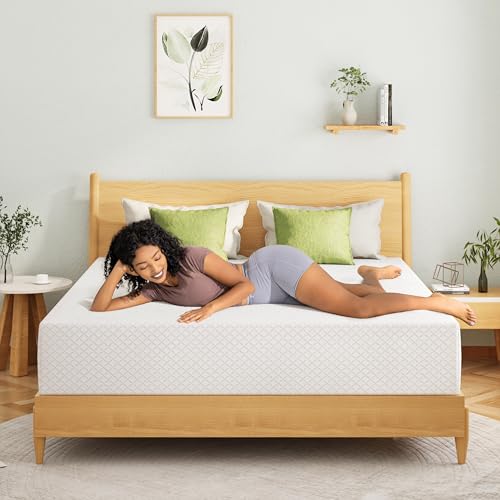
EGOHOME Queen Mattress 12 Inch
$249.9912 inch queen memory foam, medium firm feel as the maker describes it.
Check price on Amazon
Novilla Bliss Mattress Queen Size
$339.9914 inch queen memory foam.
Check price on Amazon
SayTale Queen Mattress 12 Inch Hybrid Queen Size Mattress in a Box Medium Firm
$161.7712 inch queen hybrid, medium firm feel as the maker describes it.
Check price on Amazon
Queen Mattress 14 Inch
$499.9914 inch queen hybrid.
Check price on AmazonFrequently asked questions
How long does a mattress typically last?
It depends heavily on construction: commonly cited figures run from 5 to 7 years for innerspring and pillow top mattresses up to 10 to 15 years for latex, with memory foam and hybrid mattresses in between at 7 to 10 years. These are averages repeated across the industry, not a warranty term or a measured standard, so a specific mattress can wear out earlier or last well past its typical range.
Which mattress type lasts the longest?
Latex mattresses are commonly cited at 10 to 15 years, the longest typical lifespan of the common constructions, followed by memory foam and hybrid at 7 to 10 years. Innerspring and pillow top mattresses are commonly cited at the shorter end, 5 to 7 years, since their spring and quilted-top components tend to lose support sooner than solid foam or latex layers.
Which mattress type wears out fastest?
Innerspring and pillow top mattresses are commonly cited at the shortest typical lifespan, 5 to 7 years, compared with 7 to 10 years for hybrid, 8 to 10 for memory foam and 10 to 15 for latex. Pillow tops in particular tend to show a visible dip in the quilted top layer before the mattress underneath is actually worn out, which is one reason they are grouped at the shorter end.
How much does a mattress cost per night?
Divide the price by the number of years you expect to keep it, then by 365 nights. A $249.99 memory foam mattress kept for its full 10 year typical lifespan works out to about $0.07 a night, while the same mattress replaced at the 8 year low end runs closer to $0.09 a night. Run your own price and expected years at Cost Per Night Calculator.
What are signs a mattress needs replacing besides age?
A visible body impression or dip that does not spring back, a sagging edge felt when sitting down, and waking up stiffer or more tired than usual are the commonly cited physical wear signs, and they matter more than the calendar. These describe physical wear, not a diagnosis of any health condition. A mattress within its typical lifespan range showing these signs is still worth checking.
Does a hybrid mattress last as long as a full foam mattress?
Close, but memory foam is commonly cited slightly higher: 8 to 10 years versus 7 to 10 for hybrid. The overlap is real, since a well-built hybrid can outlast a lower-quality foam mattress and vice versa. The coil layer in a hybrid is the component most likely to lose support first, while a foam mattress's comfort layers are what typically compress and show a body impression over time.
How to read the numbers on this page. Standard mattress and bedding dimensions are industry-wide and the same across manufacturers. Guidance like replacement intervals, firmness by body weight and walking clearance is convention rather than a measured standard, and every table here says which it is. Where a manufacturer does not publish a figure we leave it out instead of estimating. This is not medical advice: a mattress is not a treatment for a medical condition, and persistent pain is a reason to see a clinician.