Comfort and bedding
Best Cooling Sheets
Quick answer
The clearest cooling claim in this roundup comes from the Coolmax® Cooling Sheets for Hot Sleepers at $28.49, sold specifically as a Coolmax cooling sheet for hot sleepers, though natural fibers like cotton and bamboo-derived viscose are generally more breathable than microfiber regardless of a cooling label.
The Coolmax® Cooling Sheets for Hot Sleepers is our top pick among cooling sheets in this roundup, priced at $28.49 and sold specifically as a cooling sheet for hot sleepers. Fabric, not thread count, is the main driver of how warm or cool a sheet sleeps: natural fibers like cotton and viscose derived from bamboo generally breathe better than heavier microfiber, and a lighter weave sleeps cooler than a dense one regardless of what a listing's cooling claim says. None of the sheets in this roundup publish a lab-measured cooling number, so the picks below are grouped by material and by whether the maker markets the set specifically as cooling.
On this page
What actually makes a sheet sleep cooler?
A sheet's fabric and weave matter more to how warm it sleeps than its thread count or its marketing label. Natural fibers such as cotton and viscose derived from bamboo generally allow more airflow than synthetic microfiber, which can trap heat against the body overnight. A high thread count microfiber sheet can still sleep warmer than a lower thread count natural fiber one, since thread count measures density, not breathability. None of the products in this roundup publish a measured cooling number, so where a listing markets a set specifically as cooling, that claim belongs to the maker, and where it does not, we describe the fabric instead of assuming a cooling benefit that is not stated.
Which cooling sheets are the best budget pick?
Beginner picks are the most affordable options in this roundup. One is explicitly marketed as breathable and cooling, the other is a lighter cotton-blend weave that is not marketed with a specific cooling claim but generally breathes better than a heavier microfiber set at a similar price.

Queen Size 4 Piece Sheet Set - Breathable & Cooling Sheets - Dark Grey
$24.99A 4-piece queen sheet set at $24.99, marketed by the maker as breathable and cooling.
Best for: A budget queen set with an explicit cooling claim
Check price on Amazon
HYPREST King Sheets Pattern 18 Inch Deep Pocket Light Grey Leaf Floral 4 PC
$36.54A 4-piece king sheet set at $36.54 in a lighter cotton-blend weave. The listing does not carry a specific cooling claim, but a lighter weave generally breathes better than a heavier microfiber set.
Best for: King mattresses where a lighter weave matters more than a cooling label
Check price on AmazonWho should not buy this tier: Skip this tier if you run hot enough that you have already tried a plain cotton or microfiber set and found it too warm, the Intermediate and Expert tiers use fabrics built specifically around breathability.
Which cooling sheets are worth paying more for?
Intermediate picks add an explicit cooling brand and a natural fiber option that trades some price for a fabric generally regarded as more breathable than cotton percale.

Coolmax® Cooling Sheets for Hot Sleepers
$28.49A queen sheet set at $28.49, sold under the Coolmax name specifically for hot sleepers.
Best for: Sleepers who want an explicit cooling fabric claim, not just a general breathable label
Check price on Amazon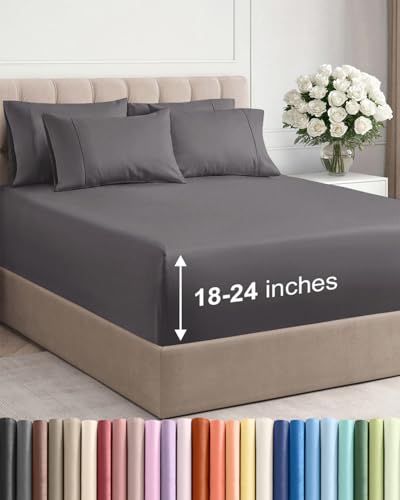
Extra Deep Queen Sheet Set - 6 Piece Breathable and Cooling Sheets - Grey
$39.99A 6-piece extra deep queen set at $39.99, marketed as breathable and cooling with the added benefit of a deeper pocket cut.
Best for: A mattress plus topper combination that also needs a deeper pocket
Check price on Amazon
Bedsure PureWoven 100% Rayon Derived from Bamboo
$62.99A queen sheet set at $62.99 in viscose derived from bamboo, a naturally breathable fiber rather than a synthetic cooling treatment.
Best for: Sleepers who prefer a natural fiber over a synthetic cooling fabric
Check price on AmazonWho should not buy this tier: Skip this tier if bamboo-derived viscose's silkier, slippery feel is not to your taste, cotton and microfiber both have more grip and texture.
What is the top-of-the-line cooling sheet option?
Expert picks move fully to natural fiber, either Egyptian cotton or viscose derived from bamboo, on the reasoning that fiber content drives breathability more reliably than a synthetic cooling treatment layered onto microfiber.

Overket Extra Deep Pocket King Sheets 18-24 Inch 100% Egyptian Cotton 1000 Thr
$75.99A king sheet set at $75.99 in 1000 thread count Egyptian cotton, a natural fiber generally regarded as breathable at this weave density.
Best for: King mattresses where cotton's crisp, breathable hand is preferred over silkier bamboo viscose
Check price on Amazon
SONORO KATE 100% Viscose Derived from Bamboo_Sheets
$89.99A 4-piece set at $89.99 in viscose derived from bamboo, a fiber generally considered cooler-sleeping than cotton in this material category.
Best for: Hot sleepers who prefer bamboo viscose's drape and feel over cotton
Check price on Amazon
Bambaw 100% Viscose Derived from Bamboo Sheets Queen Size Set - 4pcs Cooling S
$80.90A 4-piece queen set at $80.90, also in viscose derived from bamboo, marketed by the maker as a cooling sheet.
Best for: A second premium bamboo option at a different price point
Check price on AmazonWho should not buy this tier: Skip this tier if you want an active moisture-wicking synthetic fabric rather than natural fiber breathability, or if a silkier, slippery drape is not comfortable for you, all three of these lean toward that hand.
How do these cooling sheets compare on specs?
| Spec | Coolmax® Cooling Sheets for Hot Sleepers | Extra Deep Queen Sheet Set - 6 Piece Breathable and Cooling Sheets - Grey | Bedsure PureWoven 100% Rayon Derived from Bamboo | Bambaw 100% Viscose Derived from Bamboo Sheets Queen Size Set - 4pcs Cooling S |
|---|---|---|---|---|
| Price | $28.49 | $39.99 | $62.99 | $80.90 |
| Size | Queen | Queen | Queen | Queen |
| Material | - | - | Viscose derived from bamboo | Viscose derived from bamboo |
| Pieces in set | - | 6 | - | 4 |
A dash means the manufacturer does not publish that figure for this product. We do not estimate it.
How does fabric affect how a sheet sleeps?
| Material | General breathability note |
|---|---|
| Cotton percale or lighter cotton blend | Generally breathes well, especially at a lower thread count |
| Viscose derived from bamboo | Silky feel, generally regarded as breathable and cooler-sleeping than cotton |
| Egyptian cotton, higher thread count | Denser weave, crisp feel, breathable at this fiber content |
| Heavier microfiber, no cooling treatment | Generally the warmest option of the group, thread count does not offset this |
Convention, not a standard
This is widely repeated guidance rather than a measured standard. Treat it as a starting point.
How we chose
These picks are drawn from the products in our catalog and grouped by the material and cooling claim each listing publishes. None of these sheets carry an independently measured cooling number, so breathability notes here reflect general fiber convention rather than lab data, and we have not tested these sheets in person. Prices are pulled from the same listings and can change after publication.
Frequently asked questions
Does a higher thread count mean a cooler sheet?
No. Thread count measures how densely a fabric is woven, not how breathable it is. A very high thread count microfiber sheet can still sleep warmer than a lower thread count natural fiber sheet, because fiber content affects airflow more than density does. If staying cool is the priority, look at the material spec, cotton and viscose derived from bamboo generally breathe better than microfiber, rather than choosing based on thread count alone.
Is bamboo bedding actually cooler than cotton?
Viscose derived from bamboo is generally regarded as breathable and often described as cooler-sleeping than cotton, with a silkier feel and drape. This is a widely repeated preference rather than a measured lab standard, and personal experience varies. Some sleepers prefer cotton's crisper, less slippery texture even if bamboo viscose runs slightly cooler for others. Trying both, or reading the material spec closely before buying, is more reliable than assuming one fiber wins for every sleeper.
What does it mean when a sheet is marketed as a cooling sheet?
It means the maker has branded the fabric or a specific technology, such as the Coolmax fiber, as designed for temperature regulation. None of the sheets in this roundup publish an independently measured cooling number, so a cooling label reflects the maker's own marketing and fabric choice rather than a verified lab result. Reading the material spec, cotton, bamboo-derived viscose or a branded synthetic fiber, gives a clearer picture than the word cooling on its own.
Can a deep pocket sheet also be a cooling sheet?
Yes, several sets combine both, a deeper pocket cut for a thicker mattress plus a breathable fabric or cooling brand for hot sleepers. The two features are unrelated to each other, pocket depth is about how far the sheet stretches over the mattress, while cooling is about the fabric itself, so check both specs independently rather than assuming a sheet marketed for one automatically covers the other.
Do cooling sheets need to be washed differently?
Most of the cooling-marketed sheets in this roundup are cotton, viscose derived from bamboo or a synthetic cooling fiber, and general care follows the fabric: natural fibers usually prefer a cooler wash and a lower dryer heat to avoid excess shrinking, while synthetic cooling fabrics often tolerate warmer washes better. Always check the specific care label on the product you buy rather than assuming one washing routine covers every material in this category.
How to read the numbers on this page. Standard mattress and bedding dimensions are industry-wide and the same across manufacturers. Guidance like replacement intervals, firmness by body weight and walking clearance is convention rather than a measured standard, and every table here says which it is. Where a manufacturer does not publish a figure we leave it out instead of estimating. This is not medical advice: a mattress is not a treatment for a medical condition, and persistent pain is a reason to see a clinician.